

Dr. Josephine “Josie” Pete is a longtime South Phoenix resident, activist, and educator. She was the first African American woman principal at South Mountain High School, and the first Black woman to serve as Assistant Superintendent in the Roosevelt School District.
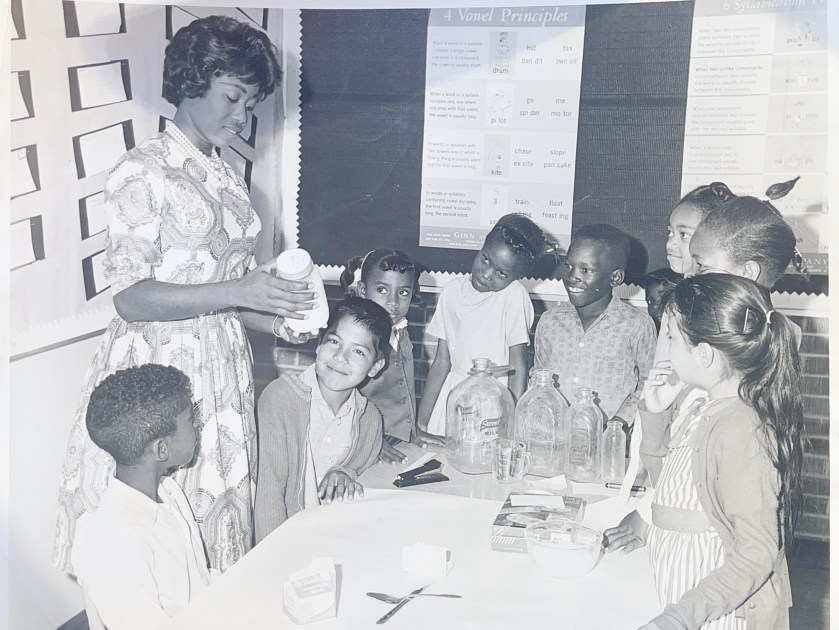
Josephine “Josie” Pete was born on April 3, 1939, in Hempstead County, Arkansas. When she was 10 years old Josephine and her family moved to Arizona. Once the settled in the Phoenix area, Josie attended 40th Street School in the Okemah neighborhood, located near the Salt River. At that time, Phoenix was segregated. Black families like Josie’s moved to Okemah, attracted by chain migration and work opportunities, along with the promise of home and land ownership. Josie’s family homestead was on 40th Street and Wood, long before the Interstate 10 cut through the community. Homes in the area lacked basic amenities like electricity, water, and paved streets. Josie’s childhood home was on several acres, and her mother grew an impressive garden.
Josie’s new school in Okemah was different from what she was used to. It was a smaller school than what she was used to with grades ranging from first to eighth. It had no playground and no kitchen. Lunch was brought in from another school. After completing fourth grade, Josie began attending Percy L. Julian School a few miles south. The new school was bigger and newer. Josie liked both schools and enjoyed being a student.
At that time, South Phoenix was a place of both struggle and resilience. The country had just come out of World War II, and while America was booming, not everyone was reaping the benefits. Schools were separate, resources were unequal, and opportunities were limited for
Black families. On top of that, Arizona itself was changing. More people were moving in, cities
were expanding, and new developments were happening. But in areas like Okemah, where Black
and minority families lived, it was a different story. There were no fancy shopping centers, no
new schools popping up overnight. If people wanted something, they had to fight for it whether
it was better roads, a decent school, or just a fair shot at an education.
While Josie was attending elementary school, much of the City of Phoenix was segregated. The area south of the Salt River was mostly called “the county,” but the people of Okemah defined their community on their own terms. According to Arizona History: The Okemah Community, “Okemah” was named for an Indigenous Oklahoma man who was revered among Black residents hailing from Oklahoma, Arkansas, and Texas. Over the years, the areas south of the Salt River were incorporated and annexed into the City of Phoenix, and a combination of stereotypes, racism, disenfranchisement, and resource management led to the area being seen as a hub of despair and criminality. But families like Josie’s had a very different experience.
In eighth grade students took a test which helped determine what high school they would be able to attend. She started High School at an integrated school called Phoenix Tech. Her sophomore year South Mountain high school construction had been completed. She transferred to South Mountain and graduated. After high school graduation Pete got married. Her husband promised her mother she would go to school. He joined the Armed services. Pete went to Phoenix College and then transferred to ASU. She went to school in the morning, worked in the afternoon, and came home to her two young daughters.
After Dr. Pete graduated from ASU she accepted her first teaching job at Palmdale elementary.
Palmdale was a school in the South Mountain Community. It meant a lot to her to work in the
community that fostered her growth, education, and community. At Palmdale she started as a
physical education teacher. She then became a second-grade teacher. After some time, her
talents led her to become a reading specialist. She left Palmdale and began teaching reading at
T.G. Barr Academy. She eventually transitioned to working as a teacher in secondary education
due to the need for a reading teacher. She then went to Carl Hayden High school as a remedial
reading teacher.
In 1968 a counseling position opened at Phoenix Union, and Dr. Pete was up for the challenge.
This was a period of unrest, social change, civil rights, integration, and gangs. Dr. Pete became a
well-known and trusted counselor. Her reputation of being a trusted and respected counselor
led her to be handpicked to join South Mountain as a counselor. After a period of time, she went
to East high school to work as a counselor until around 1983. In 1983 East High School closed
and she was given the choice to go to Central or go back to South Mountain high school. Dr.
Pete chose to “Go home” and she went back to South Mountain. After about two years Dr. Pete
became the first black female principal of South Mountain in 1985 to 1990.
After leaving her position as principal she began working for the district in the human relations
department. She was promoted and became the first and only female deputy superintendent.
She was the deputy superintendent for about 5 years. After two district buy outs Dr. Pete
decided to retire. She not only watched as the city grew geographically, and by population, but also the growth of Civil Rights in the community and state. She wasn’t just an observer, she was a strong advocate and contributor to its growth. Dr. Pete poured back into the community she loves and calls home. Her impact grew as she grew. She started as a teacher, principal, first female deputy superintendent, and volunteered. She’s been a role model and mentor throughout her career and beyond.
Dr. Pete in the news:
| Narrator | Dr. Josephine Pete |
| Birthdate | April 3, 1939 |
| Place of Origin | Hempstead County, Arkansas |
| Place of Residence | South Phoenix, AZ |
| Role | Retired Educator |
| Years active in South Phoenix | 1949- |
| Interview Date | November 22, 2023 |
| Location | South Mountain Community College |
| Duration | 1:28:07 |
| Interviewed by | Student Researcher: Felicia Thompson Faculty Researchers: Dr. Summer Cherland, Liz Warren, Mary Nunn |
| Story Written by | Student Contributors: Angelica Tello, Mykenzie Flores, Stephanie Glenn, Robert Rivera, Delina Hadish, Priscilla Lujan Faculty Co-Author: Dr. Summer Cherland |
 South Phoenix Oral History Project